

Commercial auto insurance for small business provides essential liability and property damage coverage for vehicles used during professional operations. Business owners in California must maintain specific minimum coverage levels, such as $30,000 per person for bodily injury, to comply with state law and protect against the high costs of accidents. This policy is necessary because standard personal insurance typically excludes commercial activities; it ensures that both company-owned and employee-driven vehicles are properly protected during work tasks.
You rely on your vehicle to keep your California business moving, yet many owners operate under the dangerous assumption that their personal auto policy provides a safety net during work hours. This misconception often leads to denied claims and devastating out of pocket expenses following a routine delivery or client meeting. Protecting your livelihood requires more than just standard coverage; it demands a strategic understanding of state mandates and specific operational risks. In this guide, we provide a clear breakdown of California’s 30, 60, 15 minimum requirements and the often overlooked necessity of Hired and Non-Owned Auto coverage. You will learn exactly when your personal policy falls short, how premiums are calculated in the current market, and how to structure a policy that secures your assets without overextending your budget.
Why Your Personal Auto Policy Likely Leaves Your California Business at Risk
Many California small business owners assume that as long as they are driving their personal vehicle, their standard auto policy provides protection. This is a common and potentially devastating misconception. Personal auto insurance is designed for routine commuting and errands, not the specific risks associated with running a company. Most personal policies contain explicit exclusions for business related activities; this means a carrier can legally deny a claim if the accident occurred while performing work duties.
Consider a local contractor based in La Palma who uses their personal truck to pick up supplies for a project. If that contractor is involved in a collision while transporting heavy equipment or materials, their personal insurer may refuse to pay for damages once they discover the trip was for business purposes. Without the right coverage, the business owner becomes personally responsible for medical bills, vehicle repairs, and legal fees, which can quickly lead to financial ruin.
Commercial auto insurance for small business is structured to handle these professional risks. Unlike personal policies, commercial coverage is built for the higher liability needs of business operations. It often provides significantly higher limits, frequently reaching $1 million, compared to the much lower limits typically found on personal plans. Furthermore, a commercial policy is designed to cover specialized vehicles like box trucks or vans equipped with permanent racks and tool storage, which are almost never eligible for personal coverage. For a detailed review of your current coverage, you can contact our La Palma office to ensure your assets remain protected.
California Commercial Auto Requirements: Decoding the 30, 60, 15 Minimums
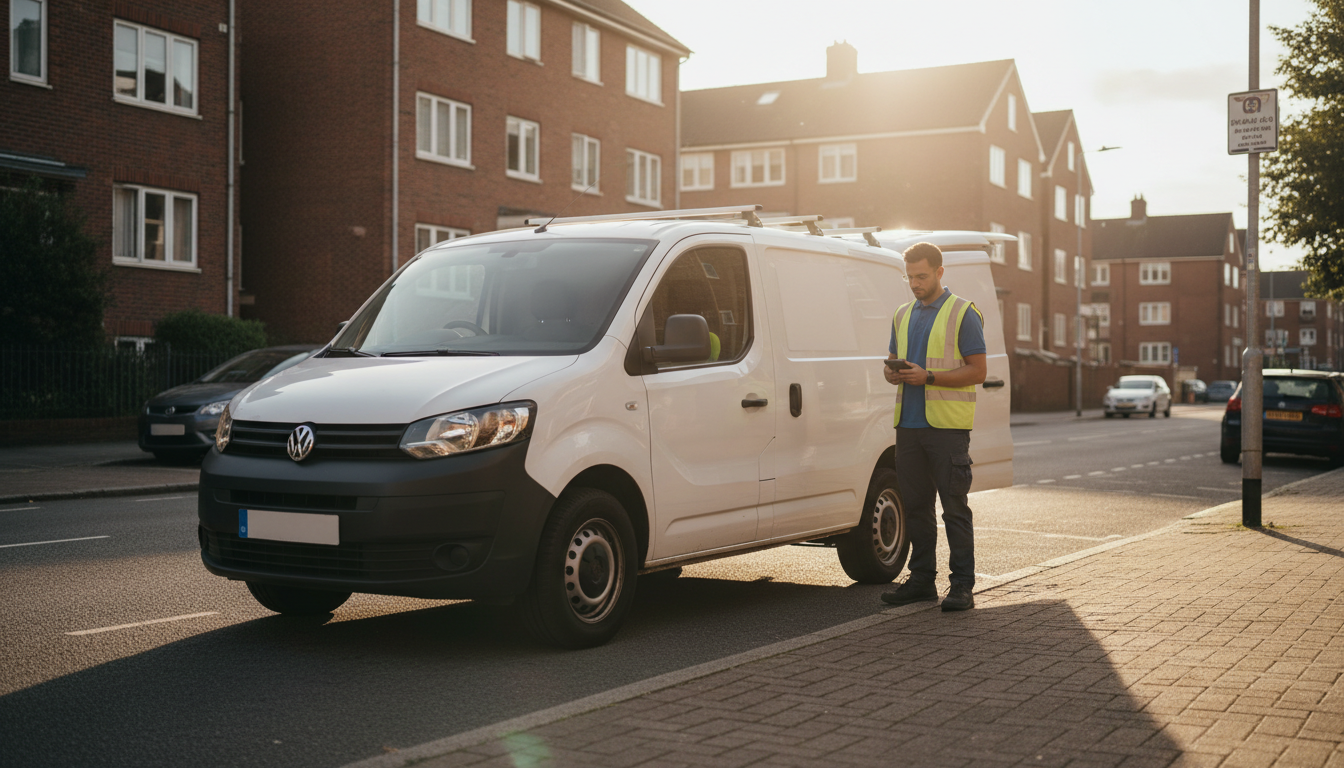
Every business vehicle registered in California must meet the state’s financial responsibility laws. Specifically, the law mandates minimum liability coverage of $30,000 for bodily injury per person, $60,000 for total bodily injury per accident, and $15,000 for property damage. In the insurance industry, we refer to this as a 30/60/15 split limit policy. While these figures fulfill the basic legal requirement to operate on public roads, they rarely provide enough protection for a functioning enterprise in the modern economy.
The property damage limit of $15,000 is particularly concerning for local business owners. If an employee in a delivery van accidentally clips a late-model SUV or a luxury vehicle on a busy street in La Palma, the repair costs can easily double or triple that $15,000 limit. Once your insurance policy reaches its maximum payout, your business becomes directly responsible for the remaining balance. This is why we typically advise higher limits when securing commercial auto insurance for small business, often moving toward a $1 million combined single limit to ensure a single incident does not jeopardize your company's solvency.
Coverage Type | California State Minimum | Typical Business Exposure Risk |
|---|---|---|
Bodily Injury (Per Person) | $30,000 | High (Medical costs often exceed $50k) |
Bodily Injury (Per Accident) | $60,000 | Critical (Multiple injuries in one crash) |
Property Damage | $15,000 | Severe (Average new car price is over $45k) |
Requirements also change based on the weight of your vehicle and your specific operations. For-hire carriers and businesses operating heavy trucks with a Gross Vehicle Weight Rating over 10,000 pounds often face much higher state and federal mandates. Depending on the cargo, such as hazardous materials or high-capacity passenger transport, California requirements can jump from the standard minimums to $750,000 or even $5 million. For many contractors, these auto risks are just one piece of the puzzle, often managed alongside General Liability Insurance for California Small Business to create a full perimeter of protection.
When Do You Actually Need Commercial Auto Insurance for Your Small Business?
Determining the exact moment to transition from a personal policy to commercial auto insurance for small business often comes down to how a vehicle is registered and used. If a vehicle is titled in the name of a business entity, such as an LLC or a Corporation, California insurers generally require a commercial policy. Even if the vehicle remains in your personal name, specific operational triggers necessitate professional coverage to avoid the claim denials mentioned previously.
Consider the following scenarios that serve as clear indicators you need a commercial policy: - Transporting specialized equipment, such as industrial ladders, welding gear, or heavy machinery. - Allowing employees to operate a vehicle for business tasks, such as running errands or visiting job sites. - Utilizing the vehicle primarily for delivery services, whether transporting documents, retail goods, or food. - Carrying passengers as a regular part of professional services, which increases liability risks significantly.
At JC Global Insurance Services, we frequently assist business owners across diverse Orange County industries in identifying these risks. Self-identifying your need is easier when looking at common local professions we serve: - HVAC and Plumbing Contractors in La Palma: Transporting expensive diagnostic tools and parts to residential job sites. - Food Trucks and Mobile Caterers: Operating heavy, modified vehicles equipped with specialized kitchen apparatus. - Independent Real Estate Agents: Driving clients to property viewings across various Southern California neighborhoods. - Landscaping and Tree Service Crews: Towing trailers and hauling heavy debris or equipment.
If your daily operations involve any of these activities, relying on a personal policy is a gamble with your company's future. For an expert review of your current vehicle use and to see if your coverage matches your actual risk, you can contact our La Palma office. Proper classification is essential to maintaining a compliant business, much like securing Workers' Comp in California for your growing team.
The Hidden Risk: Hired and Non-Owned Auto Coverage (HNOA) Explained

Even if your company does not own a single vehicle, you likely still face significant automotive liability. Hired and Non-Owned Auto Coverage (HNOA) is a vital component of commercial auto insurance for small business that addresses two specific exposures often overlooked by California owners.
Hired Auto Coverage: This applies to vehicles your business rents, leases, or borrows. If you rent a van for a corporate event or lease a vehicle for short term use, this coverage protects the business entity in the event of a liability claim.
Non-Owned Auto Coverage: This covers vehicles owned by your employees but used for business purposes. Common examples include an administrative assistant driving their personal car to the bank or a restaurant employee using their own vehicle for deliveries.
The primary risk here is the secondary nature of the coverage. In California, if an employee causes an accident while working, their personal insurance typically pays first. However, personal limits are frequently insufficient to cover major medical costs or multi vehicle repairs. Once the employee's personal policy is exhausted, the business entity is often targeted in lawsuits for the remaining balance. Adding HNOA to your General Liability Insurance for California Small Business or a standalone commercial auto policy ensures your company assets are not drained by an employee's errand. If you are unsure if your staff’s current usage puts you at risk, contact our La Palma office for a liability assessment.
What Factors Determine Your Commercial Auto Premium in California?
Understanding the cost of commercial auto insurance for small business requires looking at several specific data points that California insurers use to assess risk. While users often search for both Business Auto and Commercial Auto, the terms generally describe the same protection; however, the actual premium depends on your unique operations. Generally, a Business Auto policy is the term used for standard vehicles like sedans or pickups, while Commercial Auto often encompasses heavier equipment or specialized fleets.
One of the primary drivers of cost is your radius of operation. A local La Palma florist making deliveries within a five mile radius presents a lower risk than a regional contractor whose technicians traverse the busy 91 and 605 freeways daily to reach jobs across Southern California. Similarly, vehicle type matters; insuring a standard pickup truck is typically more affordable than insuring a heavy box truck or a specialized cargo van, as larger vehicles pose a higher risk of significant property damage in a collision.
Your employees' driving records also play a pivotal role. Carriers evaluate the motor vehicle records of every person listed on the policy. Drivers with clean records help keep premiums stable, while those with moving violations or accidents will drive costs up. Finally, the level of coverage you choose impacts the price. While state minimums are inexpensive, a $1 million liability limit is the professional standard for protecting business assets. When combined with other essential coverages like General Liability Insurance for California Small Business, your auto policy becomes a pillar of your financial security. For a customized quote that balances these factors, contact our La Palma office to speak with an expert.
Navigating Choice: Why an Independent Agency Like JC Global Makes the Difference

Selecting the right commercial auto insurance for small business requires more than just picking a name from a search result. In California, the insurance landscape is exceptionally complex, and the path you choose to secure coverage significantly impacts your long term costs. Many business owners unknowingly limit their options by working with captive agents who represent only a single insurance company. This lack of choice means you are restricted to one set of rates and one specific underwriting philosophy, which may not align with your particular risk profile or industry requirements.
As an independent agency, JC Global Insurance Services operates with a fundamentally different model. We are not bound to a single carrier; instead, we maintain strategic partnerships with top rated insurers such as Travelers and Chubb. This allows our team to shop the market on your behalf, comparing multiple California specific policies to find the most competitive rates and robust coverage terms. If one carrier changes their pricing for heavy trucks or high mileage delivery routes, we have the flexibility to pivot and secure a better alternative without interrupting your business operations.
For over 20 years, we have served as a trusted advisor to the La Palma and broader Orange County business communities. This deep local experience is paired with a commitment to accessibility, offering full bilingual support in English and Korean. We understand that clear communication is vital when discussing legal requirements and split liability limits. When you contact our La Palma office, you are speaking with professionals who understand the regional traffic risks and regulatory environment. We provide the expert advocacy you need to protect your assets and make confident decisions about your company vehicles.
Navigating commercial auto insurance in California is about more than just checking a box for compliance. It is about protecting the livelihood you have built from unpredictable risks on the road. While understanding the basics is a great start, the specifics of state mandates and coverage limits can be complex. If you want expert help ensuring your policy fits your unique business needs, the team at JC Global Insurance Services is here to guide you. We focus on providing the clarity and support required to keep your business moving forward safely.